Showing posts with label PKR. Show all posts

Friday, January 20, 2012

Hasan Ali does a Political Mambo

by Terence Netto@www.malaysiakini.com

COMMENT Every now and then a political party is wracked by the problems caused by a stormy petrel. The recalcitrant is born, not made, so a degree of prescience about when and how to put out the nuisance is to be greatly valued though rare to find.

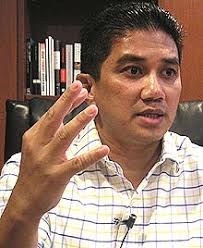
It is now PAS' turn to feel the heat generated by the decision to expel its former Selangor state executive councillor Hasan Ali (left). The man is not going to go gently into the night; he is determined to cause as much damage as possible.

Though he does not have much support, as evidenced by the lack of nominations from the PAS branches in the state ward in which he was elected, he can count on Umno-wallahs to give him the publicity and audience for his rants.

PAS has gotten rid of him but must live for some time with the consequences of its decision to excise the gangrene from its body.

Hasan is not like Zulkifli Nordin, the former PKR MP who spelt trouble for the party early in his tenure as the representative for the parliamentary seat of Kulim Bandar-Baru. PKR were tardy in chopping him when they had the chance to in the later part of 2008, after Zulkifli had been flagrant in violating its ideological principles when he barged into a Bar Council-organised seminar on religious conversions.

A chop in time saves the chopping party much public mortification; delay emboldens the recalcitrant to go ballistic with his "I'm the wronged one" theatrics. Zulkifli, unlike Hasan, is a small fry; so the consequences of the delay in getting rid of him were not too costly to PKR.

In contrast, Hasan is a man with the gravitas of a long-established reputation as a motivational expert. Reading him wrong means one is saddled with the consequences a long time after one realises the depth of one's misreading.

Hasan's appetite for power

Hasan's ambition was stoked when he was consulted by UMNO's Mohd Khir Toyo on the possibility of a coalition government between UMNO and PAS in Selangor as results came in on the night of March 8, 2008, that the opposition had won control of the state.

Khir was trying to forestall the formation of a PKR-led administration by propositioning Hasan, who was the PAS commissioner for Selangor, about an UMNO-PAS coalition. The talks reputedly broke down over Hasan's insistence that he be the Menteri Besar in such an eventuality.

The next morning PKR's Khalid Ibrahim unwittingly whetted Hasan's appetite for power further by offering him the Deputy Menteri Besar's position in a PKR-led government. After that Hasan was unstoppable, much like a shark with the scent of blood in the water: he was often a source of dissidence in the state administration led by Khalid.

pkr taman ehsan selayang ceramah 020810 hasan aliHasan, who held the Islamic affairs portfolio, took perverse pleasure in being at odds with the rest of the Selangor state government.

This he flagrantly demonstrated in the incursion of Jais (Selangor Islamic Affairs Department) into a charity dinner function hosted at the Damansara Utama Methodist Centre in August last year.

Before the initially confused matters of the incursion could settle down into something like clarity, Hasan went public with his alarums about Christian proselytisation of Muslims having occurred at the dinner.

This was a leap that turned out to be unsustainable by the facts, but that mattered little to the PAS legislator. Hasan was not only unconstrained in raising the alarm about Christian proselytisation of Muslims - this despite a lack of evidence that this had actually occurred at DUMC and elsewhere in the country - he went to make common cause with Himpun, a body that was hastily formed to campaign against the supposed threat.

More than a torn in PAS' flesh

When it transpired that PAS wasn't going to go along with the storm fomented by Himpun with an assist from Hasan over alleged Christian proselytisation, the alarmist was unfazed. Hasan persisted in his synthetic cause and with that he became not just an embarrassment to the party but a wound in its flesh.

That wound became an abscess when Hasan fulminated against Pakatan Rakyat supremo Anwar Ibrahim's, predicament in the immediate prelude to the verdict to be delivered on Sodomy II.

The PAS central committee's surgical decision to bring Hasan's brazen run of dissidence to an end with his expulsion was the response of a party that knew any further forbearance towards would convert a torn in its flesh into a dagger at its heart.

The combined lessons of the Zulkifli Nordin (left) episode in PKR and the Hasan Ali imbroglio in PAS would support the conclusion that some prescience is needed when assessing the character of a refractory member. There are nuances to recalcitrance, the more brazen shades compounded of vaulting ambition and self-appointment as guardians of some confession.

The latter shades are recipes for recalcitrance morphing quickly into rebellion. Good discernment is necessary for an assessment of the threat and a surgical decision is imperative once the menace threatens to go overboard. Pakatan's attitude towards its dissidents should be - dissent yes, insurrection no.

Thursday, December 15, 2011

UK's The Guardian says guilty verdict against Anwar Ibrahim will hurt Malaysia's reputation

by Malaysiakini

Influential British newspaper The Guardian says Anwar Ibrahim will likely be handed a guilty verdict in the Sodomy II trial, and warned that it will severely hurt Malaysia’s reputation in terms of democracy.

In a hard-hitting column by Assistant Editor Simon Tidall, said the only person to blame should this happen is Prime Minister Najib Abdul Razak. Tidall warned that “the portents do not look good” for Anwar, as the case winds to a close.

Plying scathing criticism over what he sees as Najib's “authoritarian tendencies” and “blatant scare-mongering”, the foreign affairs columnist urged Malaysia's Western allies to “take a closer look at their friend”.

“Malaysia is valued as a trading partner, counter-proliferation collaborator, and non-combatant member of the Afghanistan coalition. But the government's human rights record and democratic practices merit closer scrutiny...

“As Anwar's ordeal approaches an ugly climax, it seems increasingly unlikely that these benchmarks will be met. The next question is: what will Malaysians and their friends do about it?”

According to Tidall, the sodomy charges, which were levelled soon after Pakatan Rakyat took over five states in the 2008 general election, “hardly seems coincidental”. “As the charismatic leader of the opposition coalition, Anwar represents the biggest challenge to (Najib's) continuing ascendancy,” he says.

Describing the Prime Minister as someone “born to power” and “accustomed to wielding it”, Tidall argued that Najib's flat rejection of a conspiracy against Anwar was suspect, considering the latter's 1998 sodomy charge. “The recycling of sodomy accusations... suggests a lack of originality characteristic of the Prime Minister,” Tidall says.

‘Najib becoming paranoid’

The Assistant Editor also opined that the timing of the impending verdict, alongside the lead-up to the 13th general election, also lends credence to the conspiracy theory.“Najib gives every appearance of preparing for snap polls on the assumption that Anwar will be out of the way and the opposition (will be) decapitated,” he said.

Adding to this, he said, is the recently-passed Peaceful Assembly Bill, which Tidall sees as a sign that Najib is not taking any chances.

Coming on the tails of the Bersih 2.0 rally in July, he said that the Bill “reneged on shaky, post-July promises of civil rights reforms” and shows that Najib is succumbing to “paranoia”.

“Now Najib is taking no chances as his lieutenants warn that Anwar is fomenting an Arab Spring-style uprising – a so-called ’hibiscus revolution’... ,” writes Tidall.

“But... Khairy Jamaluddin, UMNO's Youth-wing leader, articulated Najib's paranoia last month when he accused Anwar's coalition of ‘trying hard to manufacture panic and disorder’ by promoting street rallies instead of elections.”

Anwar has been charged with sodomising his then aide Mohd Saiful Bukhari Azlan on June 26, 2008. Following submissions earlier this week, the defence is due to reply tomorrow to points made by the prosecution. Justice Mohamad Zabidin Mohd Diah will then set a date for the verdict.

Pakatan's Social Democracy takes root

by Terence Netto @www.malaysiakini.com

COMMENT: Except for the fact it does not assure that no MP from the party will move a Private Member’s Bill to have hudud enacted, the latest PAS policy document ‘Negara Berkebajikan’ all but confirms that an Islamic state is not the party’s goal when and if Pakatan Rakyat takes power.

pakatan ceramah shah alam 041211 anwar hadiComing as it does a week after MCA made a concerted attempt to re-ignite non-Muslim fear of an Islamic state, the PAS policy statement acts as counter to that fear and the BN parties’ exploitation of it.

Nearer to the general election, the BN components can be counted on to resuscitate the bogey to frighten non-Muslim voters into thinking that support for Pakatan is an invitation to PAS to introduce hudud.

A ‘Nation of Care and Opportunity’, as the PAS policy document released on Sunday is subtitled, goes some distance in assuring that a social democracy, not an Islamic state, is what PAS has in mind when, together with its Pakatan allies PKR and DAP, it comes to power.

Not exactly a panacea but...

Social democracies are going out of fashion in Europe - where from the 1960s the German social democrats were the most successful at giving credence to it - because of unsustainable government debt caused chiefly by uncontainable entitlements.

However, in this part of the world, this ideology of government is set to be given renewed sustenance by a Pakatan administration should it come to power after Malaysia’s 13th general election, expected to be set in train after the Chinese New Year festivities of late January-early February are completed.

NONEPakatan ideologues believe that once corruption is whittled down to the bone, competitive tenders are introduced, the public sector made more efficient and purpose-driven, and national resources allocated more equitably, the hard-working middle class in Malaysia would be sprung and those at the bottom of the ladder would be uplifted by savings on governmental operational costs that will be channeled to them.

Ditto, a social democracy would be born, aided and abetted by a host of liberalisations to the political culture by the removal from the statue books of repressive laws.

A reformed and revitalised Judiciary and a renewed Police Force would be the icing on the plum pudding of a Pakatan government.This is not exactly a panacea for all that ails the country but, if realised, would represent a radical improvement over what presently obtains under UMNO-BN.

Prescriptions based on wrong diagnosis

The UMNO-BN pattern of governance, even more so under the bogus reformer Najib Razak than under his predecessors, is for the sustenance of a national assets - and resources-appropriating plutocracy at the top, displaying elements of a social democracy for the bottom especially when elections are hovering, opting for a muddle where social and educational policies are concerned - all this, against a backdrop of recurrent racial and religious tensions.

Though this module of governance is no longer tenable, its traits are so entrenched that when the skipper of the crew attempts reform or liberalisation, the supposed improvement turns out to be worse than the previous condition.

NONEThis simply means that the people with the prescriptions are basing their actions on wrong diagnosis.

This is what has happened to practically all measures adopted by the government of Prime Minister Najib to reform and improve, in the last two and half years, the administration he inherited from his predecessor Abdullah Ahmad Badawi.

The inescapable point is that the stale thinking that underlies the UMNO-BN module of governance, the product of a 54-year incumbency, simply cannot be banished under a hail of modernising labels, like ‘Government Transformation Programme’, ‘Economic Transformation Programme’, ‘1Malaysia - People First, Performance Now’.

These terms’ vacancy is soon exposed and the electorate moves from suspicion that “Something’s rotten in the state of Denmark”, to use Shakespearean terminology, to a determination to rid the country of the stench.

Genuine reform, not illusory promises

PAS’ antennae tell them that the people want genuine reform, not illusory promises, which is why the party is prepared to relegate its long-held Islamic state agenda to a backburner.

It would be unwise to assume that that agenda would stay there because support for syariah is a Muslim obligation.

NONEIt’s certain to come up again but when that happens, what is presently happening in the Islamic crescent countries extending from the Mediterranean to the Bosphorus would impact on Muslim politics in Malaysia.

One cannot be sure how things would eventuate in the Islamic crescent but the Khomenist module that won out in the Iranian crisis of the late 1970s - a module that wasn’t really intended by the main actors of the anti-Shah insurrection - is not the definitive word on how things would culminate.

In other words, the dice is rolling but in the age of the Internet and other social media, the numbers it comes up cannot last if rigged against democracy and the basic freedoms considered vital for its upkeep.Somebody ought to tell Vladimir Putin this.

Wednesday, December 07, 2011

The Daim link: Zaid has to get his act together or wither away

Written by K Suresh, Malaysia Chronicle

Kita President Zaid Ibrahim has done it again! He has now decided in a rather dramatic about-turn to stay out of the forthcoming 13th General Election and back the opposition alliance, Pakatan Rakyat (PR), instead.

Yet, hardly weeks ago, Zaid couldn’t wait to turn up in Kota Kinabalu and declare that Sabah Kita, the local chapter, would field candidates in all 60 state seats and 26 parliamentary seats – including one in Labuan. He was brimming with supreme confidence on arrival at the airport. By a stroke of luck, reporters who had earlier gathered there for another function, covered his arrival too, no doubt “for old times’ sake”

Except in Sarawak, Zaid had also made some noises along similar lines – “we will contest many seats” - in Peninsular Malaysia. Sarawak watchers say, had he declared in Kuching that his recycled party would take on the Taib Mahmud regime in every seat in the state, the Ibans in particular would have "all died laughing".

East Malaysian rebuff

The poor reception in Sabah and Sarawak in recent days must have made Zaid come to grips with the political realities on the ground. His past popularity in the two states, during his Parti Keadilan Rakyat (PKR) days, is now nowhere in evidence. He’s no longer feted like royalty in the two states and local reporters are avoiding him like the plague.

Zaid couldn’t get a crowd of even 20 people to attend his recent political ceramahs (lectures) in Kota Kinabalu and in the outskirts, and little wonder, given the 'newness' or his party and the baptism of fire in which it was formed after leaving PKR in a cloud of controversy.

So far, Kita has only been able to attract political has-beens. There was a time when 200 to 500 people would turn up to hear Zaid speak, wherever he went. These numbers must have gone to his head and persuaded him finally to quit PKR in a huff.

Zaid also had pretensions, at one time, to lead the 3rd Force in Malaysian politics. This was a no-brainer of an idea put in his head by some bloggers in Peninsular Malaysia and other bogus characters passing themselves off as cyber-journalists.

3rd Force and Waythamoorthy

Zaid saw the 3rd Force as ushering in a three-party system like in the United Kingdom. He flew to London in a great hurry and tried to get Hindraf Makkal Sakthi chairman, P Waythamoorthy, to support such a platform under his leadership. Waythamoorthy reportedly listened politely but didn’t commit himself. Waythamoorthy has been one disappointed man ever since Zaid quit PKR suddenly; dashing his earlier hopes that here was a man he could talk to in the party.

Not that it was national politics Waythamoorthy was keen on, but more so, he was in agreement with activists in Sabah and Sarawak that Malaysia needed a Malaysian Borneo-based a national coalition to compete with Pakatan Rakyat and the ruling Barisan Nasional (BN), both Peninsular Malaysia-based national coalition. The 3rd Force, Waythamoorthy agreed, would give meaning to the 1963 Malaysian Agreement and stand up for the autonomy promised therein to Sabah and Sarawak.

Any takers - would anyone dare?

Over in Malaysian Borneo as in Peninsular Malaysia, what has been particularly galling of late has been Zaid’s tendency to praise Malaysian Prime Minister Najib Razak at every opportunity he gets. If he doesn’t get an opportunity, he creates one and comes out shamelessly in gushing praise of Najib’s latest gimmick or hype.

Since Najib didn’t take the bait as often as he expected, Zaid has decided to sulk in PR’s corner of the ring. It’s anybody’s guess whether there will be any takers, given that barely 3 months ago in September, Zaid had wanted to gon on a roadshow for Najib!

Meanwhile, in a statement posted on its website, this is Kita's reason for its sudden change of heart. "Whilst we disagree with some of the opposition’s policies, we believe that despite these shortcomings the opposition will not destroy racial harmony in Malaysia ... unity demands that smaller parties, such as ourselves, give way to larger political parties to ensure optimum results in the election,” it said.

The Daim factor

Zaid clearly needs to get together in politics and decide once and for all whether he’s in or out. If he’s in, he should stop vacillating and say what he means and mean what he says.

There are many doubts about him in the minds of the voters and ex-Pakatan colleagues. He has to clarify and clear up these doubts planted single-handedly by himself since the days of the old Umno.

For starters, Zaid cannot shake off the sneaking suspicion of late that he’s actually not his own man. This due largely to the fact that he was Umno's chief lawyer and from there had built the nation's biggest law firm. There has also been speculation that he’s a proxy for former Finance Minister Daim Zainuddin.

Daim is the man who never became Prime Minister because his “kuda” (horse), Mahathir Mohamad, turned against him one day and soon after kicked him out from the Federal Cabinet.

One will never know for certain what actually brought Daim – the executor of Mahathir's hare-brained scheme to create Malay millionaires – to finally come to blows with the former PM. But Mahathir was the ultimate 'user'. He used issues with the same ruthless disregard as he did with people. And once done, he discarded them with impunity.

Party grapevine has it that Zaid had impressed Daim, when the latter was Treasurer of both Umno and Umno Baru. Zaid, the lawyer, it appears had a role to play somewhere in the accounting of the old Umno assets. Perhaps, this is why many in the party see a link between the two men.

Deliberately created chaos for Anwar

But whatever the merits or otherwise of the alleged Daim-Zaid association, it’s clear that this factor more than anything else drove the latter out from PKR although the excuse given was “the tainted party polls”.

No election is free from irregularities, even fraud, but the legitimacy of any election stems from the line in the sand: was any evidence of irregularity, or fraud, serious enough to affect the outcome of the result. If not, irregularity or fraud is not an issue. Zaid, as a lawyer, chose not to know and instead compromised PKR’s image by mindlessly alleging voting fraud at every opportunity and to the great delight of Umno.

If bygones are to be bygones, Zaid should for one apologise for imputing sinister motives to those were responsible for conducting the PKR polls late last year. it paved the way for Najib to go to town with his theories and allegations.

Eyeing slot in Pakatan?

Zaid should also state whether Kita plans to apply for membership in Pakatan and thereby establish his credentials and credibility. In a way, this will be a homecoming of sorts for him, whether he is accepted or given the boot.

Zaid should also clarify whether Daim is the grand puppet master behind his party. This factor, if true, will not go down well with Anwar Ibrahim, the de facto PKR chief and former deputy prime minister, who had also taken on Daim's job as Finance minister in the mid 90s.

The two men get along like oil and water, and Daim is believed to have been one of the masterminds behind the first round of bogus sodomy charges pressed against Anwar by the Umno-led federal government.

The bottomline is that Zaid’s and Kita’s support for Pakatan must be unconditional if it’s to be seen as sincere and worthy of consideration.

Everyone makes mistakes. To err is only human. But at this point in time, it’s more than a little difficult to accept that to forgive is divine.

Malaysia Chronicle

Tuesday, December 06, 2011

PKR no pushover in Sarawak

Mohd Ariff Sabri Aziz | December 6, 2011

The April 16 Sarawak election proved that despite Umno maligning Anwar Ibrahim, PKR still made 'inroads into Dayak ground'.

COMMENT

There’s a view that PKR cannot win any parliamentary seats in Sarawak and that all embattled Sarawak United People’s Party (SUPP) seats will go to DAP.

Allow me to cite one observation passed to me by the Oracle of Syed Putera, who incidentally is the alter ego of former economic adviser Daim Zainuddin.

You can almost say that whatever the Oracle spews is what Daim thinks.

Recalling the April 16 Sarawak state election, the Oracle said the 100 percent victory by Taib Mahmud’s Pesaka Bumiputera Bersatu (PBB) wasn’t unexpected. PBB won all 35 seats it contested in the state election unlike Umno (in 2008 polls).

But the Oracle was more concerned about the victory by PKR in the Sarawak state election.

He said that Anwar Ibrahim (PKR de facto leader) with all the character assassinations carried out on a daily basis, had managed to assist Sarawak PKR chairman Baru Bian get three seats!

What do the wins represent?

Unless Umno people are sleeping or are busy shashaying in the lobby of Concorde Hotel and cockily holding fort in the coffee house, the wins tell us that the OPPOSITION CAN WIN.

PKR made inroads into Dayak grounds.

Then came the news about the sacking of one MP from the Sarawak Barisan Nasional coalition – Sarawak Progressive Democratic Party’s (SPDP) Dr Tiki Lafe from Mas Gading. SPDP has four parliamentary seats.

The sacking shows there is dissent within the SPDP and may result in election losses.

With the SUPP gone, PBB is banking on SPDP and PRS which has six seats.

Both SPDP and PRS have now 10 seats between them but a number of these will fall to PKR, predicts the Oracle.

The Oracle adds that the opposition has already 16 seats in the bag from Sarawak. And that’s just a precursor of worse things to come.

The writer is a former Umno state assemblyman and a FMT columnist.

Monday, December 05, 2011

CT Ali on the Politics of Transformation, Reformation and Deformity

www.freemalaysiatoday.com

Najib Tun Razak reminds me of the little boy who wants to be liked and does all he can to please everyone. He is for 1Malaysia. He is for Ketuanan Melayu. And he insists, without showing how, that the two are compatible. In the process, he antagonizes both the Malays and non-Malays.

He has seen it fit to embark upon a zealous path of transforming and reforming, riding his high horse like a crusading avenger hell bent upon eliminating any restriction on our civil liberties and any barrier that will prevent our people from developing their minds. Or so it seems. He would like us all to believe that he at last has heard what the rakyat wants and now wants to do their bidding.

Suddenly, in 2011, our students have become mature and responsible enough to dabble in politics. Suddenly, the ISA is no longer necessary and the PPPA is an anachronism from a dark age.

He runs full tilt into this reforming zeal without understanding that one’s enemy sometimes gives one enough rope to hang oneself. Amazingly, he apparently cannot tell that he has already taken enough rope.

He speaks of transforming and reforming, but he in fact deforms. The Peaceful Assembly Bill is a case in point. If he had taken the effort to work out what the rakyat really want, then he would have spared himself the insult of being told that his proposal is more draconian then what Mynmar is doing.

So what does he do now? He was already basking in the glory of announcing the bill, with grand assurances of grand intentions. Now he realises that it is easy to announce initiatives but hard to make them happen.

So he tweaks them, like one would tweak the carburetor of a car. But the last carburetor car stopped production in the early 1990s.

And this is the problem with Najib. He thinks of the 1990s when people are already in the 21st century. The ISA, PPPA and the law that violated our right to assemble should have been jettisoned well before the turn of the century.

So Najib is playing catch up. But will UMNO let him?What I would like to know is who advises Najib? Who looks at the pros and cons of introducing the Peaceful Assembly Bill and all the other initiatives he has announced?

I do not need Lim Kit Siang or Anwar to tell me that these are not really initiatives, but simply Najib playing to the gallery of voters. There is no need for a court challenge or a walk by a group of lawyers to tell me that the Peaceful Assembly Bill is another one of those poorly configured moves that are heavy on PR and zilch on substance.

Living the moment

Doesn't anybody tell Najib that he is making of himself look foolish when he replaces a draconian legislation with another draconian one? I would have thought that at least Idris Jala would have put his hands up and say, “Excuse me Datuk Seri, but I think we need to go through that PA Bill again.” Or is he too busy plugging up leaks?

Najib seems oblivious to what is happening around him because he lives with the moment. He does not understand that he cannot be all things to all people. And you cannot please everybody. A leader does what is right and does it right. He leads.

Najib has a blog. I have one too, and I know the amount of work required to make it relevant and interesting to people who you hope will read what you write. How much time does Najib spend on his blog? I think not enough to write even one article a week. And he says he talks to us through his blog. He even sends me emails to inform me about what is happening on his blog.

Should I be grateful for this or should I see it for what it really is: a cheap shot at “connecting” with us bloggers and the rest of the Internet community. It insults my intelligence. It is yet another attempt by the Najib to seen as Mr Cool, and I am sure it costs the rakyat money. No, you are not cool, Mr Prime Minister. You are wasting our time and our money for no gain to you or to us.

Najib is caught up in lies of his own making. He pretends to be a blogger when he obviously is not. He makes himself believe that he is connecting with the young when what he is he truly doing is acting out the instructions of his PR people.

Now this is what really worries me. If what we see are the best of Najib’s efforts –after all, you must put forward your best effort for public consumption—what happens in the Cabinet? Do they take collective responsibility for stupidity?

All this depresses me. A Prime Minister like Najib depresses because it says much for what we have become. Are we in fact a nation prepared to accept a Prime Minister as bland as an unsweetened tofufa?

Like Pak Lah, Najib is no orator, though he tries. Like Pak Lah, Najib allows the interests of family and cronies to override those of the nation he governs. But Pak Lah was never tempted to hold onto to being prime minister any longer then what he perceived was his time to serve. Leaving Putrajaya was easy for Pak Lah. It will not be so for Najib.

The Pak Lah lesson

Putrajaya is a sanctuary for Najib from his past follies. He needs Putrajaya and that is why he does what he does. He must remain in Seri Perdana. If it requires him to skip the light fandango, he will do so.

Meanwhile, he nervously awaits the 13th general election. He is not nervous not for the fate of UMNO or Barisan Nasional, but for what it will bring him once the lady sings. Can you remember Najib nervously wiping his perspiring face while making his RM$5 million offer to the people of Sibu to vote for BN not too long ago?

Well, he is sweating buckets at the thought of the general election because he knows he goes into battle with Pakatan Rakyat, backed by an UMNO that will only be too pleased to see him fall.UMNO is not forgiving of leaders who cannot deliver what they require to continue having their way with our country. Ask Pak Lah.

CT Ali is a FMT columnist and blogger.

Wednesday, February 25, 2009

Sultan has no powers to ask Nizar to quit

by NH Chan
Malaysiakini
20.2.09

According to the Perak constitution, the ruler has a personal discretion in the performance of two functions - the appointment of a menteri besar and the withholding of consent to a request for the dissolution of the legislative assembly.

On Feb 4, Mohd Nizar Jamaluddin, the mentri besar, was granted an audience by the sultan to request for the ruler’s consent to dissolve the Perak State Assembly.

The next day, Deputy Prime Minister Najib Abdul Razak also requested for an audience with the sultan as the Perak BN chief and consent was granted for him to present himself before the ruler.

This is the account given in the Star, Feb 6:

“The four-page statement, signed by the sultan’s private secretary, Col Abdul Rahim Mohamad Nor, was issued at 2.15pm, Feb 5.

“It said Mohd Nizar had an audience with the sultan yesterday to seek the ruler’s consent to dissolve the state assembly. Earlier in the day, Najib, who is Perak Barisan chairman, had an audience with the sultan twice.

“At the audience in the morning, he informed the ruler that BN and its supporters now had the majority in the state assembly. The statement said the sultan had summoned all the 31 assemblymen before him to verify the information.

“‘His Royal Highness had used his discretion under Article XWI (2)(b) of the Perak Darul Ridzuan State Constitution and did not consent to the dissolution of the Perak State Assembly,’ the statement added.”

Bernama later reported that Mohd Nizar was summoned to an audience to be informed of the sultan’s decision not to dissolve the state government.

Now what is wrong with that?

It is wrong because the sultan saw Najib without Mohd Nizar being present. Let me explain why it is improper for him to do that.

A fatal error

As a former Lord President, who was then the highest judge in the country, the sultan should know that it is improper to see an interested party alone without the other side being present before announcing his decision.

It was only after the ruler had seen Najib that he summoned Nizar to inform him that he had decided not to dissolve the legislative assembly.

That was his undoing. It was a fatal error. This is not a case of natural justice where both sides have a right to be heard. There was no hearing.

This was a request by a menteri besar to his sultan to dissolve the legislative assembly where, by the very fact of the application itself, he has admitted that he no longer commands the confidence of the majority in the assembly.

In other words, it is a request under Article XVI, Clause (6) of the Perak constitution. To such a request, the ruler has a personal discretion not to grant it under Article XVIII, Clause (2) (b).

The personal discretion to grant or not to grant must be exercised without any suggestion or suspicion to any reasonable outsider that he was partial to one political party or coalition of parties.

In other words, it is about the appearance of impartiality - justice should not only be done, but should be seen to be done.

And in the present context, what is the right thing to do?

Every judge, unless he is a bad judge, knows that the right thing to do is to apply the oft-repeated saying of Lord Chief Justice Hewart in R v. Sussex Justices, ex parte McCarthy: “It is not merely of some importance, but is of fundamental importance that justice should not only be done, but should manifestly and undoubtedly be seen to be done”.

As Lord Denning would have put it in Metropolitan Properties Co (FGC) Ltd v. Lannon [I9691 1 Q.B. 577: “The court will not inquire whether he did in fact, favour one side unfairly. Suffice in that reasonable people might think he did. The reason is plain enough. Justice must be rooted in confidence: and confidence is destroyed when right-minded people go away thinking: ‘The judge was biased’.”

When perception matters most

Now we know why the people of Perak and elsewhere in Malaysia, are making harsh statements about the sultan. A quick search on the Internet will prove this.

It is the perception of the people that matters; and the confidence of the people is destroyed when they go away thinking that he was biased - that he had been influenced by Najib.

It is very sad that Sultan Azlan Shah, who had been held in high esteem internationally and by the populace, has, in a careless moment, lost all that.

His reputation for fairness and justice has been shattered when they go away thinking that he had been influenced by Najib or that he has favoured BN. It does not matter whether he did, in fact, favour one side unfairly.

Suffice it that reasonable people might think that he did. The die is cast and we cannot put the clock back. Hereafter, there may be many who will no longer believe in his speeches on good governance and the integrity of the judiciary.

The impression is that he does not practise what he preaches.

When the menteri besar ceases to command the confidence of the majority of the members of the legislative assembly, he has two choices.

First, he may request the ruler to dissolve the assembly for the purpose of a state election. Second, if his request is turned down by the ruler, “he shall tender the resignation of the executive council”.

This is provided in Article XVI, Clause (6) which reads: “(6) if the Menteri Besar ceases to command the confidence of the majority of the members of the Legislative Assembly, then unless at his request His Royal Highness dissolves the Legislative Assembly, he shall tender the resignation of the Executive Council.”

What Article XVI, Clause (6) says is this: If the menteri besar ceases to command the confidence of the majority of the legislative assembly, he shall tender the resignation of the executive council, unless the ruler has, at the request of the menteri besar, dissolved the legislative assembly.

However, in the present case, Mohd Nizar on Feb 4, had requested the ruler to dissolve the legislative assembly, and the ruler informed him on Feb 5 that he acted in his discretion to withhold his consent for the dissolution of the assembly.

That being the case, the menteri besar has no other choice but to tender the resignation of the executive council.

Cannot declare MB post vacant

Under Article XWI, Clause (2), paragraph (b), the ruler has a personal discretion to withhold his consent to the menteri besar’s request for the dissolution of the legislative assembly.

Unfortunately, the ruler, in the present case, has acted unconstitutionally when he side stepped the constitutional provisions of Article XVI, Clause (6) of the laws of the Perak constitution.

This was what he did.

The Sultan of Perak’s media statement said: “Mohd Nizar was summoned to an audience with the sultan to be informed of the ruler’s decision not to dissolve the State Assembly, and in accordance with the provisions of Article XVI (6) of the Perak Darul Ridzuan State Constitution, the Sultan of Perak ordered Mohd Nizar to resign from his post as Perak menteri besar together with the members of the state executive council with immediate effect.

“If Mohd Nizar does not resign from his post as Perak menteri besar together with the state executive council members, then the posts of menteri besar and state executive councillors are regarded as vacant.”

As we know the sultan is a constitutional monarch who has no power to rule except a couple of discretionary powers mentioned in Article XVIII, Clause (2).

So, apart from the couple of matters mentioned in Article XVIII, Clause (2), the Sultan of Perak has no power to order Mohd Nizar to resign from his post as Perak menteri besar together with the members of the state executive council with immediate effect.

Nor has he the power to declare that the posts of menteri besar and state executive councillors are regarded as vacant.

In the present case, the menteri besar had acted under Article XVI, Clause (6) which permitted him to request the ruler to dissolve the legislative assembly if he ceased to command the confidence of the majority of the members of the legislative assembly.

In this case, the ruler turned down his request. Then the menteri besar has no choice but “to tender the resignation of the executive council”.

So, why did the ruler, in the present case, depart from the provisions of Article XVI, Clause (6)?

Under the provisions of Clause (6), the sultan knew that the ball was in the menteri besar’s court and it was to be the menteri besar who “should tender the resignation of the executive council”.

Yet he chose to ignore these provisions of the Perak constitution.

A pretended show of power

The ruler has defied the provisions of Article XVI, Clause (6) when he resorted to ordering the menteri besar to resign from his post when he has no power to do so.

The sultan knew, or he ought to have known, that under Article XWI, Clause (2) (a) the menteri besar is appointed by the sultan from the members of the legislative assembly “who in his judgment is likely to command the confidence of the majority of the members of the Assembly”.

This is what Article XVI, Clause (2) says: “(2) The Executive Council shall be appointed as follows, that is to say - (a) His Royal Highness shall first appoint as menteri besar to preside over the Executive Council a member of the Legislative Assembly who in his judgement is likely to command the confidence of the majority of the members of the Assembly.”

So that when the menteri besar ceased “to command the confidence of the majority of the members of the legislative assembly”, and this is borne out by his request to the ruler for dissolution of the assembly under Article XVI, Clause (6), the ruler has the power to appoint another “who in his judgement is likely to command the confidence of the majority of the members of the assembly” under Article XVI, Clause (2) (a).

It is a personal discretion of the ruler to act on the appointment of a menteri besar. Since the ruler has the power to appoint another person as menteri besar in place of Mohd Nizar based on his judgement, there is, therefore, no need to order him to resign at all.

This is no more than a pretended show of power when, in fact, there is no such power.

And if the menteri besar delays the tender of the resignation of the executive council as required by Article XVI, Clause (6), there is Clause (7) which provides: “(7) Subject to Clause (6) a member of the Executive Council other than the menteri besar shall hold office at His Royal Highness’ pleasure, but any member of the Council may at any time resign his office.”

This means that the ruler can sack any member of the executive council or all of them at any time.

In his book, ‘What Next in the Law’, the late Lord Denning wrote: “King James II was a bad king. It was he who favoured the Roman Catholics and was bitterly opposed to the Protestants. It was he who dismissed the judges.

“It was he who sent Judge Jeffreys on that Bloody Assize. It was he who directed that the Seven Bishops should be prosecuted for seditious libel - when all they had done was to present a petition to the king himself. It was the acquittal of the Seven Bishops that forced the King to flee the realm.”

It was a young barrister called John Somers who drew up a Declaration of Rights. Although very junior at the Bar, he had made a short speech of five minutes which led to the acquittal of the Seven Bishops. Immediately after that trial, he was entrusted with the task of preparing a Declaration of Rights - to which the new King William assented.

This Declaration became the Bill of Rights 1689. It is not easy to lay your hand on any book which contains the full text of this great document. I will set out here a few of the principle clauses (for the present purpose I will only refer to clauses 1 and 2):

‘The Lords and Commons…

I … (as their ancestors in like case have usually done) for the vindicating and asserting their ancient rights and liberties, declare:

1. That the pretended power of suspending laws, or the execution of by regal authority, without consent of parliament, is illegal.

2. That the pretended power of dispensing with laws, or the execution of laws, by regal authority, as it hath been assumed and exercised of late, is illegal.

II … That William and Mary prince and princess of Orange be, and be declared, King and Queen of England…’

UK’s Bill of Rights

Macaulay, in his ‘History of England’ (Volume III) described the importance of the Bill of Rights in these words: “The Declaration of Right, though it made nothing law which had not been law before, contained the germ … of every good law which has been passed … of every good law which may hereafter, in the course of ages, be found necessary to promote the public weal, and to satisfy the demands of public opinion.”

If we are to have a new Bill of Rights, will it too be the germ of the law which, in the complexities of modern society, maintain the rights and freedoms of the individual against the all-powerful bodies that stride about the place?

I shall now return to the subject matter of this article.

I have borrowed the title of it from the second clause of the Declaration of Rights as drafted by the young barrister John Somers. Clause 2 reads:

“That the pretended power of dispensing with laws, or the execution of laws, by regal authority, as it hath been assumed and exercised of late, is illegal.”

The above quotation should serve as a fitting reminder that the laws of the land, more so the Perak constitution, should not be sidestepped by the ruler or, to quote from Lord Denning, by “the all-powerful bodies that stride about the place”.

If anyone thinks that he can dispense with the law for the execution of it, then this clause should remind them that the power to do so is only a pretended power. Article XVI, Clause (6) is what we are talking about here - the menteri besar should be allowed to tender the resignation of the Executive Council in due course of time without being hurried by regal authority exercising a pretended power.

The laws of the Perak constitution should be administered even-handedly and not unequally by giving the impression to the general public that preferential treatment was shown to some persons.

It is the appearance of impartiality that matters. It does not matter whether he did, in fact, favour one side unfairly. Suffice it that reasonable people might think that he did.

Substitute the phrase “by regal authority” for the phrase “by those in power” and we have an axiomatic rendering which applies to today’s modern society.

The executive branch of any government, be it federal, state or local, cannot ignore the people’s call for justice and fair play which throughout the ages have been “found necessary to promote the public weal, and to satisfy the demands of public opinion”.

The call of public opinion is a call to maintain “the rights and freedoms of the individual against the all-powerful bodies that stride about the place”. The executive branch of any government can ignore the voice of public opinion at its peril.

Unwillingness to heed the demands of public opinion can lose the mandate of the populace in the next election.

I think the writing is already on the wall. The demands of public opinion is a universal one. If the old order has been found wanting, it must give way to the new.

——————————————————————————–
NH CHAN, who is former Court of Appeal judge, lives in Ipoh.

Sunday, November 30, 2008

PKR expects more election victories


By Adib Zalkapli
Sunday November 30 2008

SHAH ALAM, Nov 29 – Parti Keadilan Rakyat declared that the opposition coalition Pakatan Rakyat expects to win more seats in Parliament.

PKR vice president Azmin Ali said the party is now preparing to face by-elections in Pensiangan and Kuala Terengganu.

An election court in September quashed Tan Sri Joseph Kurup's victory, who won uncontested in the March 8 general election and a by-election is expected pending an appeal by Barisan Nasional.

Yesterday, two term Kuala Terengganu MP Datuk Razali Ismail passed away while playing badminton.

"I believe Kuala Terengganu will become Pakatan Rakyat's seat," said Azmin at a public rally here today.

"The seat belongs to Pas. We accept the decision made by the Pakatan leadership and will fight to ensure our victory," he added.

In the last general election Pas candidate Mohamad Sabu was defeated by 628 votes. An independent candidate, Maimun Yusuf lost her deposit.

The PKR election director also told thousands of party supporters at Malawati Stadium that the party has activated its machinery to face the Sarawak state election.

He said that people's mood in the state has changed compared to during the last state election in 2006.

"We were chased out by the people then, as we are a Peninsular political party, but now they have become receptive to our struggle," he said while praising Ngemah state assemblyman Gabriel Adit who joined the party two weeks ago.

Prior to Adit's admission into the party, Dominic Ng of Padungan was PKR's sole representative in the Sarawak assembly.

Azmin also reiterated the party's stand that it would continue its struggle to topple the BN government and declared that the opposition coalition would take over Putrajaya soon.

"After March 8, the people keep asking for a change, we heard them during the Permatang Pauh by-election. We won with a bigger majority. The Malays who were threatened chose to be with us," said Azmin.